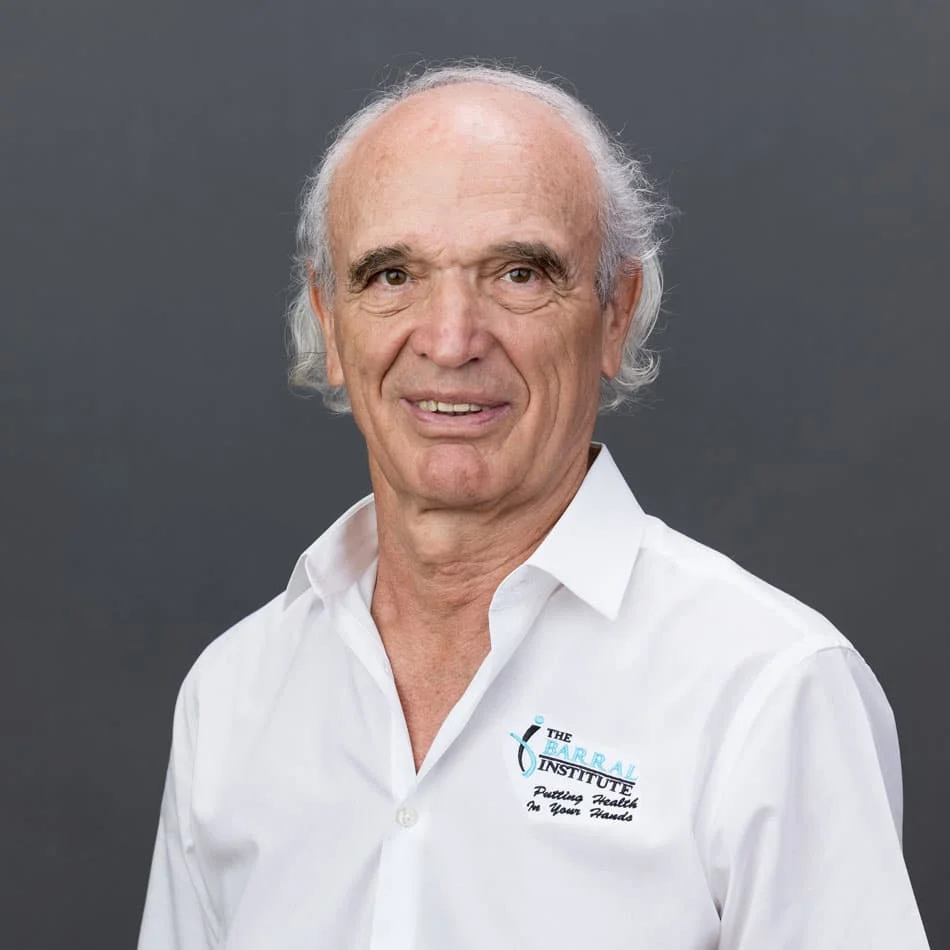
The Founder
Jean-Pierre Barral
Osteopath, physiotherapist, researcher and clinician. Creator of the Visceral Manipulation method and one of the most influential manual therapists of our time.
"Only the tissues know. Our work is to listen to them." — Jean-Pierre Barral, DO
The clinician who listened
Jean-Pierre Barral was born in France and trained as a physiotherapist before completing his Doctorate in Osteopathy at the European School of Osteopathy in Maidstone, England. His career combined three worlds: intensive clinical practice, anatomical research — including dissection work at the School of Medicine of Grenoble — and teaching. That combination is what produced the method.
In 1974, while following the movements of a patient’s body, Barral noticed that pressure applied to a specific point in the abdomen produced predictable changes in the patient’s posture and pain pattern. That observation opened a line of research that would eventually become Visceral Manipulation. Over the following four decades, Barral and his collaborators mapped the manual therapy of organs, nerves, blood vessels and the brain itself — building what is today one of the most comprehensive bodies of manual therapy knowledge in the world.
Recognition
TIME Magazine named Barral one of the "Healers of the 21st Century" — an unusual distinction for a manual therapist. He has served as Chairman of the International College of Osteopathy in Saint-Étienne and as faculty at the Université Paris Nord, where he directed the first Visceral Manipulation department ever hosted within a faculty of medicine.
The legacy
Today more than one hundred thousand practitioners worldwide have trained directly or indirectly in the Barral Method. The curriculum is taught in dozens of countries through the Barral Institute International network. Research in journals of manual therapy, anatomy and clinical medicine continues to validate techniques that Barral developed decades ago with nothing but his hands and his patience.
At our Madrid center, we have the privilege of continuing this work — teaching the full curriculum to new generations of European practitioners.